
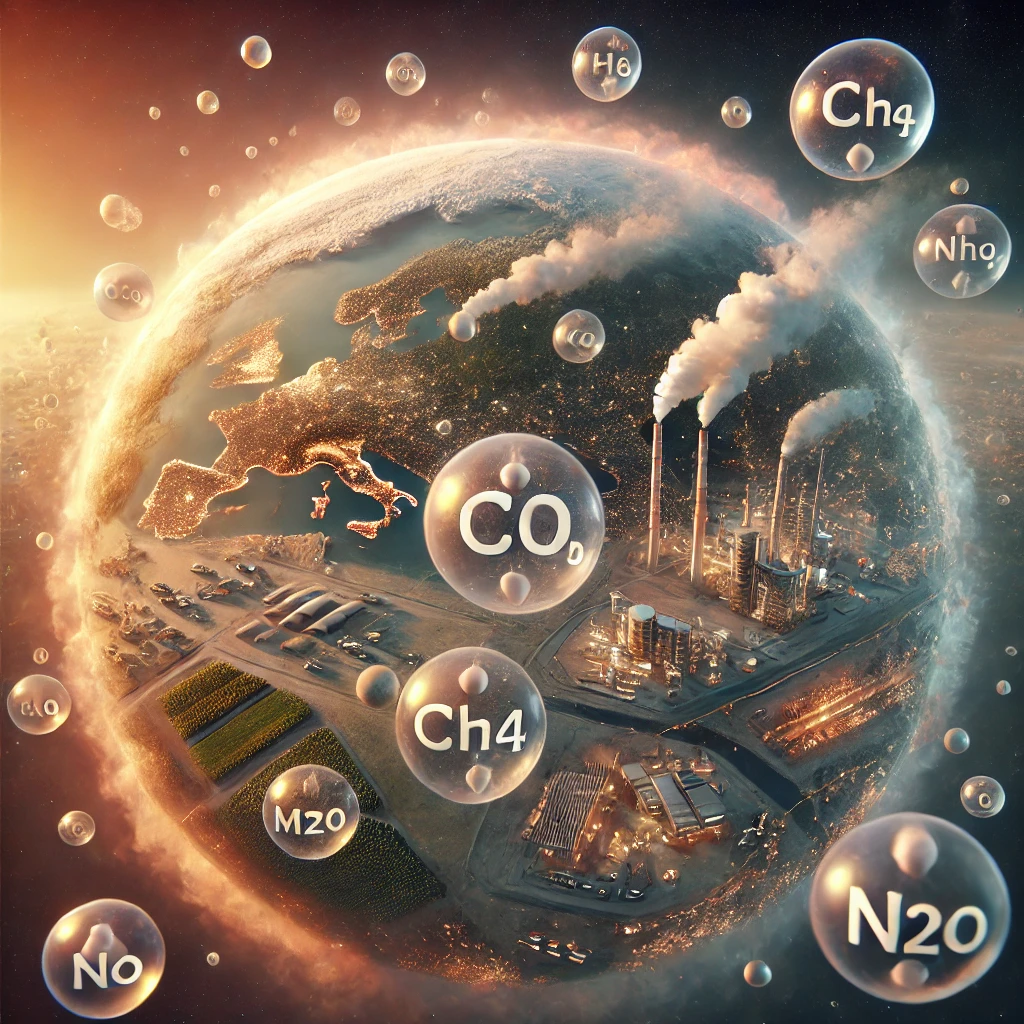
Greenhouse gases (GHGs) are a group of gases that trap heat in the Earth’s atmosphere, contributing to the “greenhouse effect.” This effect plays a critical role in maintaining the Earth’s temperature, but human activities have significantly increased the concentration of these gases, leading to global warming and climate change. Understanding greenhouse gases, their sources, and their impact is essential for addressing climate-related challenges.
What Are Greenhouse Gases?
Greenhouse gases are substances that absorb and emit infrared radiation. When these gases accumulate in the atmosphere, they trap heat, preventing it from escaping back into space. This process is essential for keeping the Earth’s surface warm enough to sustain life, but an excess of greenhouse gases can disrupt the natural balance and lead to a warming climate.
Common Greenhouse Gases
-
Carbon Dioxide (CO₂)
Carbon dioxide is the most significant greenhouse gas produced by human activity. It is primarily released through the burning of fossil fuels like coal, oil, and natural gas, as well as through deforestation and land-use changes. -
Methane (CH₄)
Methane is a potent greenhouse gas, about 25 times more effective at trapping heat than CO₂ over a 100-year period. It is released during the production and transportation of coal, oil, and natural gas, as well as from livestock, landfills, and rice paddies. -
Nitrous Oxide (N₂O)
Nitrous oxide is another greenhouse gas that has a much higher global warming potential than CO₂. It is emitted from agricultural activities, industrial processes, and the burning of fossil fuels. -
Fluorinated Gases
These are synthetic gases used in a variety of industrial applications, including refrigeration and air conditioning. Examples include hydrofluorocarbons (HFCs), perfluorocarbons (PFCs), and sulfur hexafluoride (SF₆). These gases have a much higher global warming potential than CO₂ but are found in smaller concentrations.
Sources of Greenhouse Gases
1. Fossil Fuel Combustion
The burning of fossil fuels for electricity, heat, and transportation is the largest source of anthropogenic greenhouse gas emissions. Power plants, industrial facilities, and vehicles are the primary contributors.
2. Agriculture and Land Use
Agriculture contributes significantly to methane and nitrous oxide emissions. Livestock such as cattle produce methane during digestion (enteric fermentation), while the use of synthetic fertilizers releases nitrous oxide into the atmosphere.
3. Deforestation
Trees absorb carbon dioxide from the atmosphere, and deforestation leads to a release of the carbon stored in trees back into the atmosphere, exacerbating the greenhouse effect.
4. Industrial Processes
Industries such as cement production, chemical manufacturing, and waste management also release greenhouse gases. For instance, cement production emits CO₂ through the chemical transformation of limestone.
The Greenhouse Effect and Global Warming
The greenhouse effect refers to the natural process by which the Earth’s atmosphere traps some of the heat from the Sun, keeping the planet warm enough to support life. Without the greenhouse effect, Earth’s average temperature would be about -18°C (0°F) instead of the current 15°C (59°F).
However, an excess of greenhouse gases in the atmosphere enhances this effect, causing the Earth’s temperature to rise. This phenomenon, known as global warming, is a major contributor to climate change.
Consequences of Increased Greenhouse Gases
- Rising Global Temperatures: Global warming leads to higher average temperatures worldwide, causing heatwaves, longer summers, and shorter winters.
- Melting Polar Ice Caps: Higher temperatures are causing polar ice caps to melt, contributing to rising sea levels and threatening coastal communities.
- Extreme Weather Events: More frequent and intense storms, floods, and droughts are expected as the atmosphere warms and the water cycle is disrupted.
- Ocean Acidification: Increased CO₂ levels are also being absorbed by the oceans, making them more acidic and threatening marine life.
Reducing Greenhouse Gas Emissions
To mitigate the impact of greenhouse gases, it is crucial to reduce their emissions. This can be achieved through various strategies:
- Transition to Renewable Energy: Shifting from fossil fuels to renewable energy sources such as solar, wind, and hydroelectric power can significantly reduce CO₂ emissions.
- Energy Efficiency: Improving energy efficiency in buildings, vehicles, and industries can reduce the amount of energy required, thus lowering greenhouse gas emissions.
- Carbon Sequestration: Planting trees, restoring forests, and using technologies like carbon capture and storage (CCS) can help remove CO₂ from the atmosphere.
- Sustainable Agriculture: Reducing methane emissions from livestock and improving soil health can reduce the agricultural sector’s impact on greenhouse gases.
- Government Policies and International Agreements: Global cooperation through policies like the Paris Agreement can help countries set emissions reduction targets and implement effective climate action.
Conclusion
Greenhouse gases play a crucial role in regulating the Earth’s temperature, but their excessive accumulation due to human activities is causing global warming and climate change. Addressing this issue requires a combination of reducing emissions, transitioning to renewable energy, and protecting natural ecosystems. The fight against climate change is a collective responsibility that requires urgent action from individuals, businesses, and governments worldwide.
By understanding the sources and impacts of greenhouse gases, we can work towards a more sustainable future for the planet.